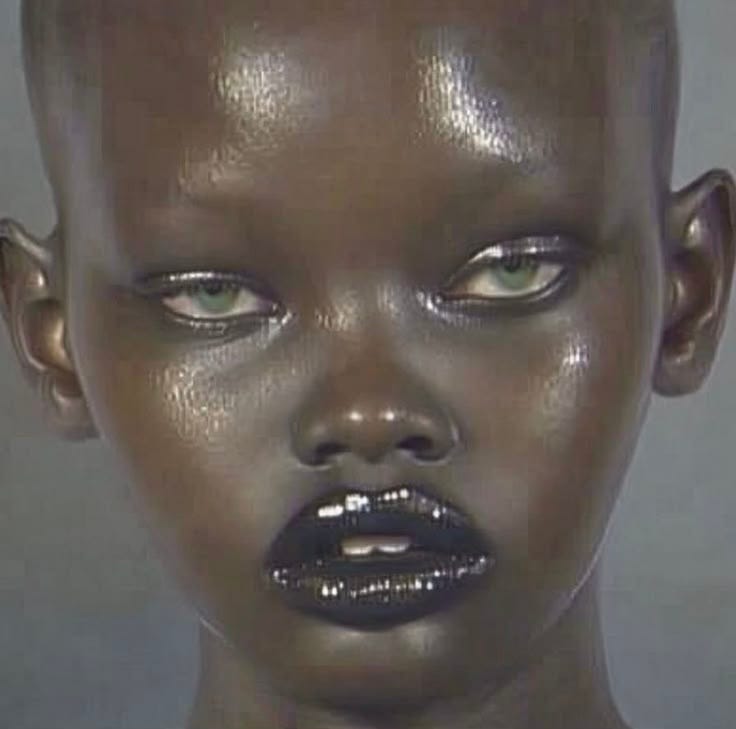
Nobody Passes
Prompt No. 62: Identity, Imagination, and Trans-Border Solidarity
Border: An outer part or edge
Boundary: Something that indicates or fixes a limit or extent.
Lately, I have been thinking a lot about borders and boundaries for reasons that are both apparent and personal. The U.S. invaded Venezuela for oil and continues to threaten Greenland for territorial expansion. Activists and reporters have been jailed, and at the time of writing, federal agents have murdered or played a role in the deaths of Keith Porter Jr., Geraldo Lunas Campos, Luis Gustavo Nunez Caceres, Luis Beltran Yanez-Cruz, Renée Good, Parady La, Victor Manuel Diaz, Herber Sanchez Dominguez, Alex Pretti, and Wael Tarabishi. In a recent article for the New York Review of Books, Fintan O’Toole explained the U.S. border policy as “both absolutely rigid for certain kinds of people (nonwhite immigrants) and absolutely unfixed for others (those who embody America’s true historic destiny).” The latter is key. “Unfixed” borders only exist for white people who are willing to maintain the political and racial interests of the state. That is the trade-off, and regardless of beliefs or affiliation, they understand and accept it. By impeding sanctioned, white nationalist violence, Good and Pretti tacitly surrendered their racial privilege. And while many are co-opting the digital activism of Black Americans to say their name, history shows their deaths will be vain.
How do I know?
Quick, white readers: Who are Andrew Goodman and Michael Schwerner?
Throughout all of this, I asked myself what would our collective reality look like were white people willing to decimate the borders that organize and sustain the nation’s power structures? The answer is we do not know because there is little evidence they can even imagine it. For example, cyberfeminism, an Internet-based approach only defined by what it is not, defies boundaries, theorizing that humanity must deconstruct identity to achieve real equality. Yet, in forming this alternative construct and related counterpublics (alternative spaces where marginalized groups can create knowledge, culture, and ideologies that challenge dominant knowledge, culture, and ideologies), white, cisgendered feminists still center their perspectives over their nonwhite counterparts. In a case study examining Black cyberfeminism, Elizabeth B. Roberts explains:
“At the core of cyberfeminism is the idea that technology and the digital sphere have been designed through a masculine framework to be tools of patriarchy. Yet, cyberfeminists argue that we can create a more equitable and inclusive digital space where everyone can thrive through counterpublics… However, Black cyberfeminists, or digital Black feminists, have pushed back on this techno-utopianism (i.e. the idea that technology is creating a better, more ideal place), arguing that in much the same ways that traditional feminism has excluded the experiences of Black women, cyberfeminism has not fully considered how Black women’s experiences play out in the digital sphere.”
Online, Black women are subject to the same oppression they experience in the material world, including hypervisiblility and supression. While our observable qualities are extracted as societal resources, we are never compensated for the seizure. Calls for cultural repatriation and independence are largely ignored. I should note that this experience is not limited to the digital environment. After posting Donna Haraway’s “A Cyborg Manfesto: Science, Technology, and Socialist-Feminism in the Late Twentieth Century” to my Instagram stories, a Black sociologist pointed out to me that while an important framework, the essay fails to acknowledge that “Black femme bodies are already technologies via slavery, forced birth, etc.” So not only are we exploited for new ideas in language, presentation, and politics, but for economic, medical, and technological advancements, as well. Therefore, it is not that white people lack imagination, it just has limits. Clearly, we cannot all get free. Even when directly challenging what Patricia Hill Collins refers to as the matrix of domination, or the complex layers of power and oppression in society, white people maintain aspects of it, particularly controlling images, or dehumanizing and exploitative stereotypes of Black women and femmes. By perpetually stripping us of our humanity, white people can then see us as test environments in establishing their “brave” New World.
Presentation plays a unique role in all of this. Black people have always manipulated fashion and appearance to navigate the matrix of domination, to challenge its borders until they become less fixed. Today, all Americans use clothing to communicate an imagined status to varying success, but instead of exploring its potential to dismantle oppressive systems, we use clothes and other observable commodities to create new borders we hope few can cross. Once we pass, the borders close. We shift the parameters to protect our insecure status. Take the two Customs and Border Protection agents who killed Alex Pretti, Jesus Ochoa and Raymundo Gutierrez. I am sure they or someone in their family immigrated to the U.S. “the right way”, allowing them to secure federal employment. But given their names, the real borders are impassible for them. We shall see whether the tactical vests and gaiters are enough to keep them free.
But that’s the thing with U.S. borders. They only exist to give the perception of freedom. When I originally wrote this piece, I focused solely on controlling images and a desire to subvert them as a silent sartorial protest. I was excited to share the work that inspired this demonstration, and perhaps I will at some point. After a decade of mawkish concerns and meaningless platitudes, white America had left me raw and irate. This was their fault and it was not enough to stay home and restrict political and organizing power. I wanted to intimidate, confront their carelessness with complex, unforgiving images of Blackness. I wanted to make it clear that I am not just bored with classic style and the limits of its reinvention. I am sick of its social function. What was once employed to assert the humanity of Black people now only aligns us with the elite. Perhaps it has allowed some to pass, but it offers no protection. Its perception of palatability only invites symbolic violence with words like “clean” and “articulate.” If Black women are the technology overleveraged in this society, then let me be the one to tell you none of us can fashion ourselves to freedom.
You have to fucking fight.